
The Fox & the Ducks
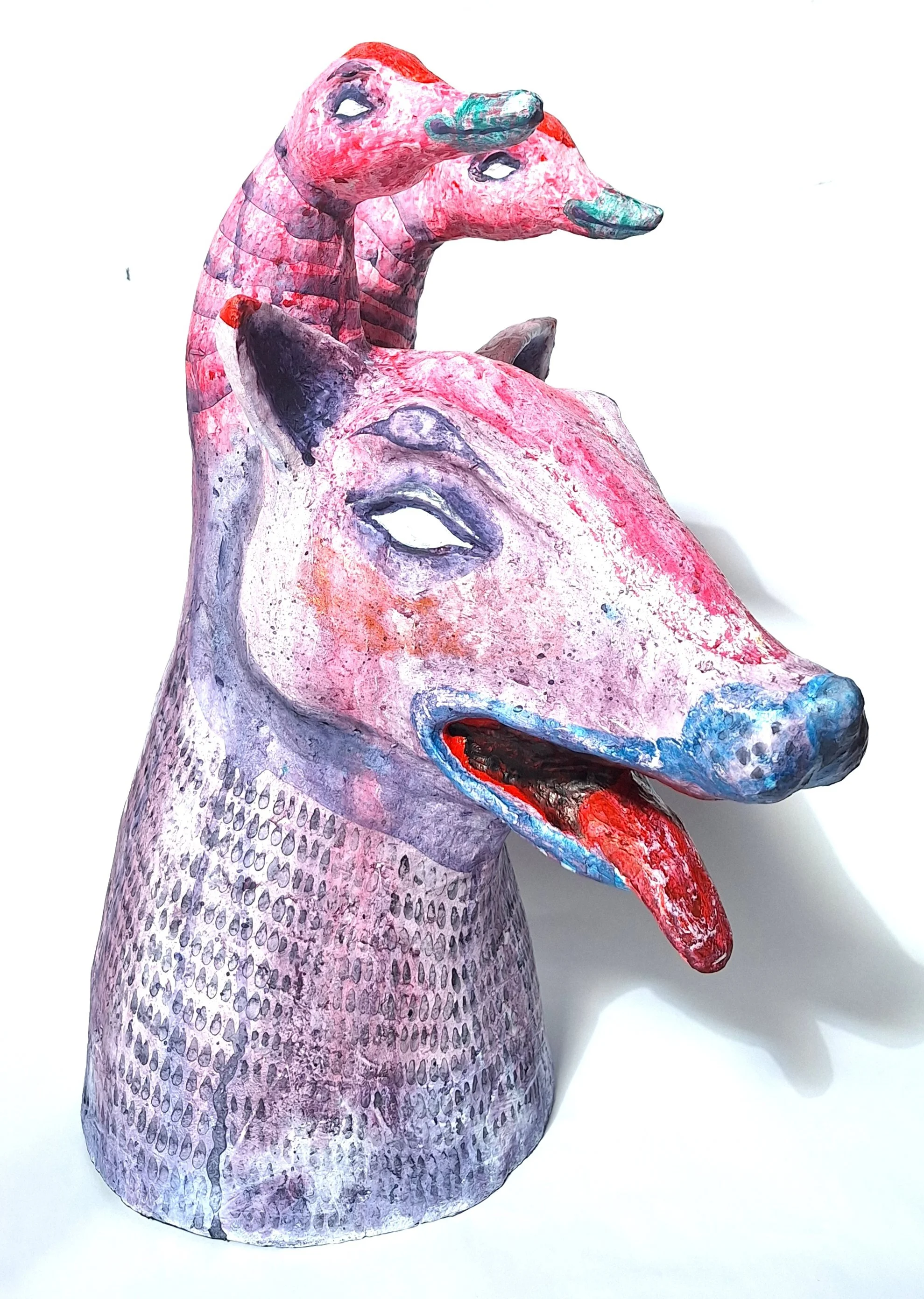
Acrylic on papier-mâché, 36 × 14 × 26 cm, 100 USD
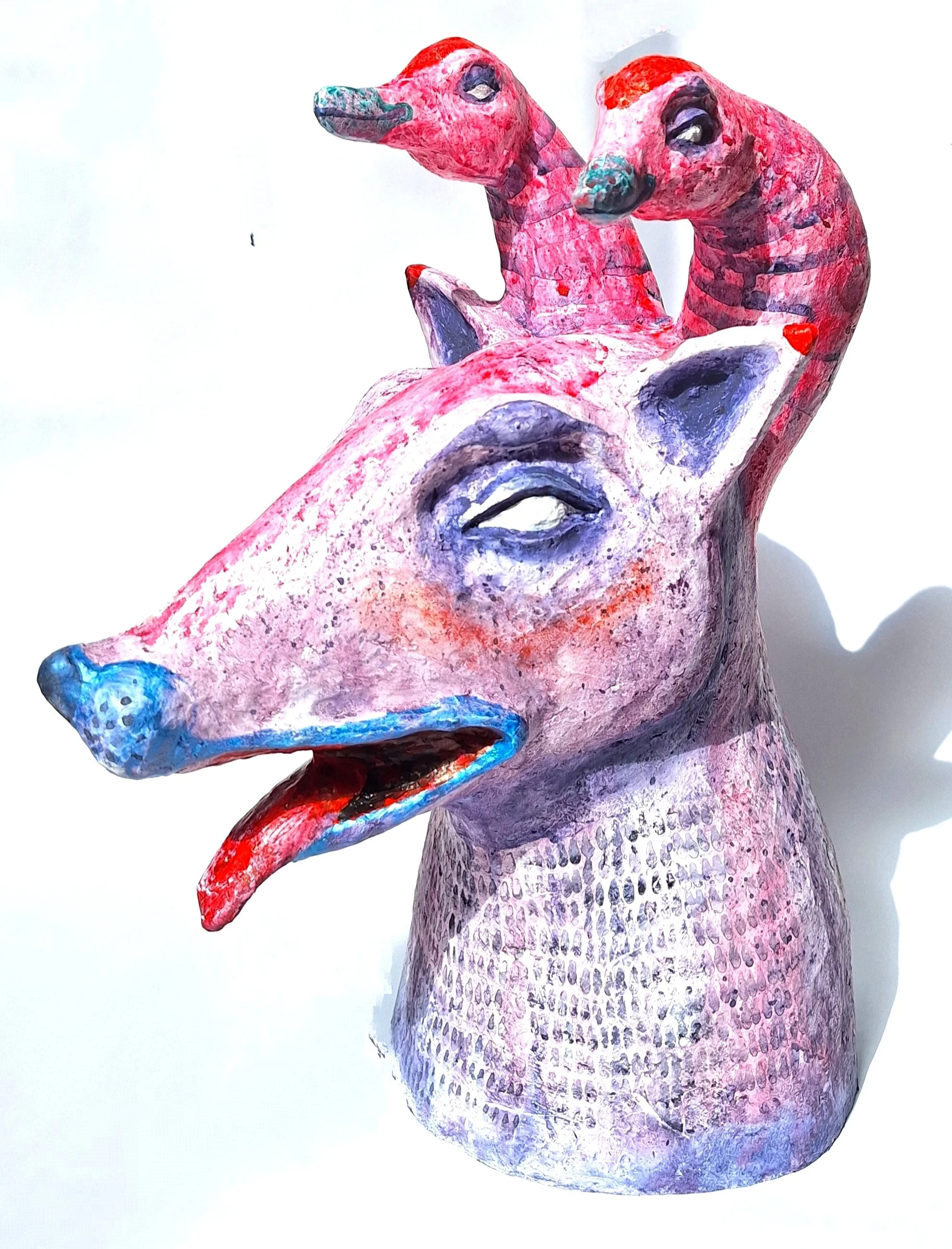
Fox (alternative view) Obsessed with hunting them, the ducks become an inseparable part of his identity
My reading of this story is partly as a critique of certain religious teachings that expect women to accept certain male behaviors even if harmful.
Source
This work was inspired by a tale of the same name in the Marzban-nameh, a Persian collection of moral, didactic, and political tales written around the 13th century in a local dialect by Marzban ibn Rustam (later translated into Persian by Sa'd al-Din Varavini). While reading both Varavini’s version and One Thousand and One Nights at the same time, I was struck by how both use the voices of animals to express significant social and political criticism. I thought including it in this series would enhance the atmosphere of imagination and enchantment.
My telling of the story
A sick, weak fox lived near a pair of ducks. One day he heard that duck liver could cure his illness. Lacking the strength to hunt, he decided to achieve his goal through deception.
He approached the female duck, and through flattery and lies, claimed that her husband intended to leave her and marry a more beautiful duck. Distressed by his words, the duck nevertheless replied that, according to her religion, she should obey her husband and accept his wishes. The fox tried to convince her that her husband had been unfaithful, and that she would be better off leaving him. The duck responded that a man could have multiple wives and that there was nothing wrong with this—provided he treated them fairly.
Nevertheless, the fox eventually persuaded the female duck that poison would free her from her husband, and promised he would provide this special remedy. Trusting the fox completely, the duck later went to his home to get the promised poison. However, the fox was lying in wait, and killed her.
Takeaways
Words can serve both as instruments of guidance and as tools of deception.
When confronted with claims and promises, critical thinking and careful judgment are necessary.